


Would you like to understand the message your dog is trying to get across? Here are the main postures a dog adopts and what they mean.
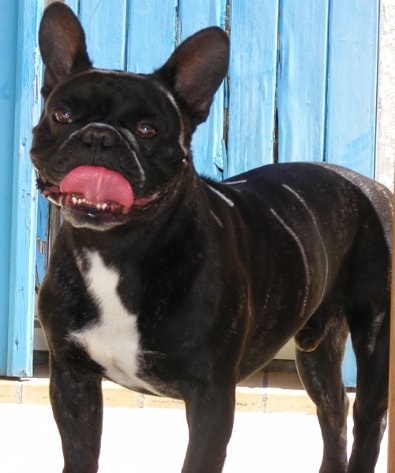
Relaxed dog
- Tail low and loose
- Ears upright
- Head upright
- Mouth open, tongue visible
- Overall relaxed posture
This posture shows that the dog is calm and does not feel threatened by anything around it.
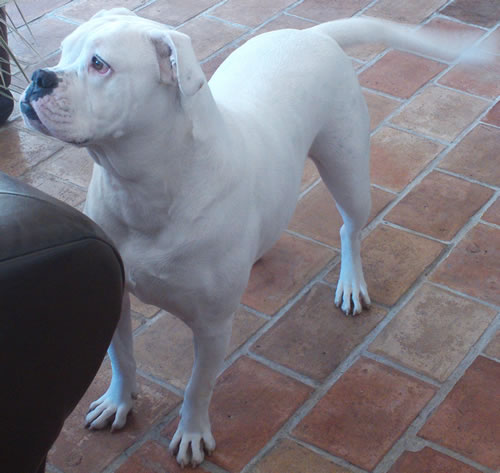
Alert dog
- Tail horizontal, possibly swaying slightly
- Ears tilted forward or turned towards whatever has its attention
- Mouth relaxed and closed
- Body leaning forward
This posture shows that the dog is paying attention to something happening close by.
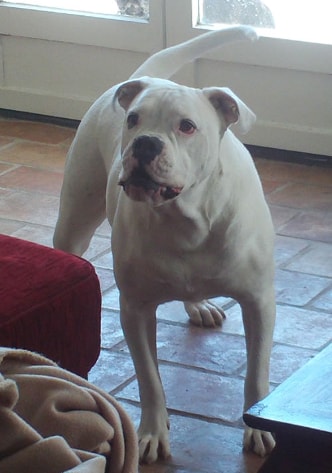
Aggressive dog, threatening attitude
- Tail bristling, raised and stiff, swaying from side to side
- Hackles raised
- Ears forward
- Fangs showing
- Muzzle wrinkled
This posture shows that the dog is ready and equipped to attack, sure of itself, and asserting its dominant position.
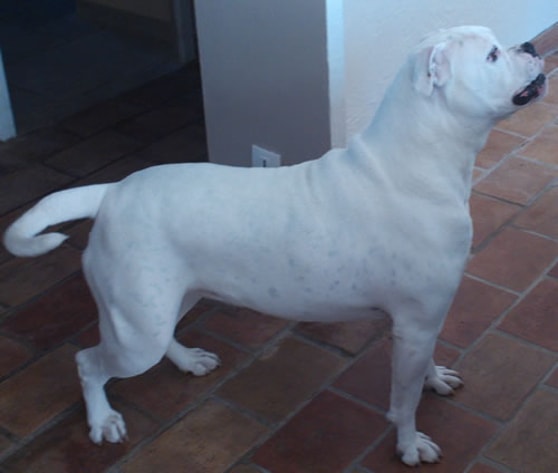
Aggressive dog, defensive attitude
- Tail between the hind legs
- Hindquarters lowered
- Hackles raised
- Ears flattened back
- Muzzle wrinkled
- Pupils round and dilated
- Lips slightly curled
This posture shows that the dog feels under attack, but is not submitting and is ready to fight back.
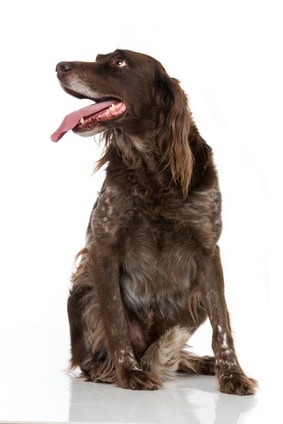
Stressed and anxious dog
- Tail low
- Low posture
- Ears flattened back
- Pupils dilated
- Rapid panting
This posture shows that the dog is under intense stress from its immediate surroundings.
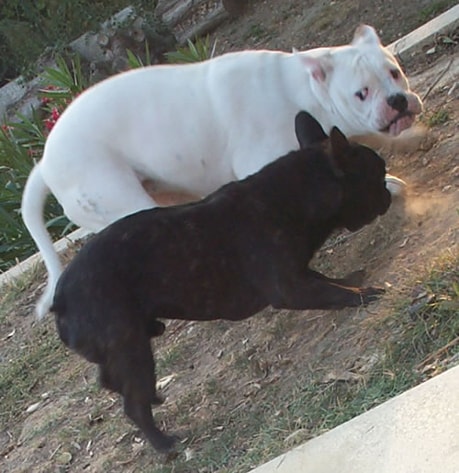
Fearful and submissive dog
- Tail low, swaying slightly
- Low posture
- Ears flattened back
- Forehead smooth
- Blinking and avoiding eye contact
- The dog licks its lips or the dominant dog's muzzle
This posture shows the dog signalling to the other party that it means no harm and accepts its lower rank.
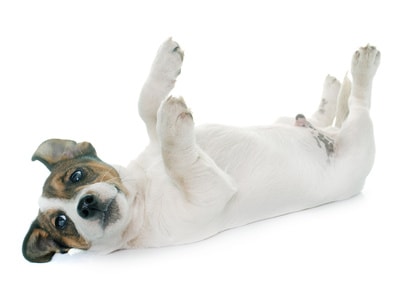
Very fearful and completely submissive dog
- Tail pressed against the belly
- Dog lying on its back
- Ears flattened back
- Head turned to the side
- Eyes half closed
This posture shows complete submission on the dog's part; it may also urinate.
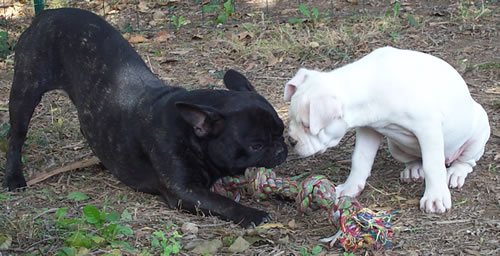
Playful dog
- Tail up and moving
- Ears upright
- Eyes wide open
- Hindquarters raised and front of the body lowered onto the front legs
This posture shows that the dog wants to play: it may look rough and excited, but it means no harm.